


 Cart
Cart
 sales@molnova.com



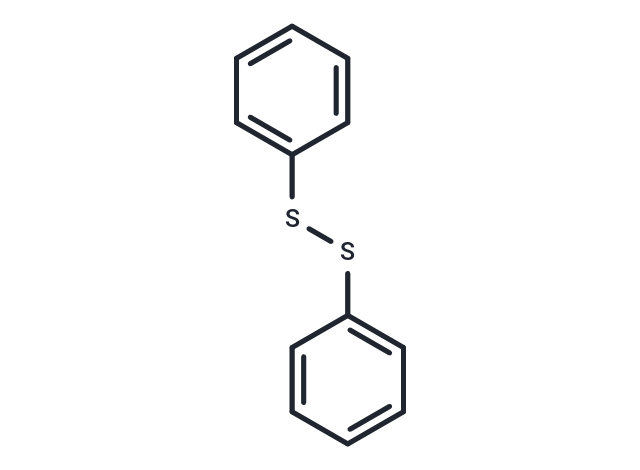
Diphenyl disulfide
CAS No. 882-33-7
Diphenyl disulfide( —— )
Catalog No. M34951 CAS No. 882-33-7
Diphenyl disulfide (Phenyl disulfide) shows anticancer activity in breast cancer cell lines.Diphenyl disulfide induces and enhances apoptosis in breast cancer cells through Bax protein hydrolysis activation and concomitant autophagy.
Purity : >98% (HPLC)
 COA
Datasheet
HNMR
HPLC
MSDS
Handing Instructions
COA
Datasheet
HNMR
HPLC
MSDS
Handing Instructions
| Size | Price / USD | Stock | Quantity |
| 1G | 27 | In Stock |


|
Biological Information
-
Product NameDiphenyl disulfide
-
NoteResearch use only, not for human use.
-
Brief DescriptionDiphenyl disulfide (Phenyl disulfide) shows anticancer activity in breast cancer cell lines.Diphenyl disulfide induces and enhances apoptosis in breast cancer cells through Bax protein hydrolysis activation and concomitant autophagy.
-
DescriptionDiphenyl disulfide is an endogenous metabolite.
-
In Vitro——
-
In Vivo——
-
Synonyms——
-
PathwayProteasome/Ubiquitin
-
TargetEndogenous Metabolite
-
RecptorEndogenous Metabolite | Apoptosis | BCL
-
Research Area——
-
Indication——
Chemical Information
-
CAS Number882-33-7
-
Formula Weight218.34
-
Molecular FormulaC12H10S2
-
Purity>98% (HPLC)
-
SolubilityIn Vitro:?DMSO : 100 mg/mL (458.00 mM; Ultrasonic )
-
SMILESS(SC1=CC=CC=C1)C1=CC=CC=C1
-
Chemical Name——
Shipping & Storage Information
-
Storage(-20℃)
-
ShippingWith Ice Pack
-
Stability≥ 2 years
Reference
molnova catalog



related products
-
Dihydrodaidzein
Dihydrodaidzein-producing bacteria might lead to clarification of some of the mechanisms regulating the production of equol by fecal microbiota.
-
2,6-Dibromophenol
2,6-Dibromophenol is extracted from the skin and muscle of flatfish.
-
Butyric acid
Butyric acid is a fatty acid isolated from many dairy products that exhibits anticancer activity. Butyric acid inhibits histone deacetylases (HDACs) and induces apoptosis and G1 phase cell cycle arrest in glioma cells.
